
GWOX is a very interesting little company. It is very illiquid, and doesn’t show up on any screener that I have tested. In terms of governance it is majority controlled by an Employee Stock Ownership Plan. As I mentioned in my notes from the annual meeting, there were 3 public shareholders in attendance and the company was shocked that we were there.
I have covered GWOX before, but after attending the annual meeting, speaking with management and (2) other public shareholders I have some updated thoughts on the company.
I’ll admit that originally, I was looking at it as an event-driven investment, but the catalysts for those corporate actions are not likely in the near term. While the underlying business is good and should be able to grow their profits as they increase their digital product offerings, it appears fully valued today.
The most important thing to understand with GWOX is the ESOP which effectively sets the price for GWOX shares. The price for shares in the eyes of the ESOP is determined via an independent appraisal, using a discounted cash flow model weighted 50-50 with an industry multiple based on 3 comparable education companies, with an additional discount added on top for lack of marketability. Historically this multiple has averaged to a 8.5x FCF multiple or 12x net income. This multiple would imply that no growth rate is used and cash flows are discounted at 12%.
You can back into what price the ESOP established for shares each year by taking the fair value of unreleased ESOP shares ÷ the suspense account balance. Today that amount is $363/share.
The FY2026 results were weak and leading indicators point to a flat FY2027. By that I mean that the current-portion deferred revenue figure indicates their contracted digital revenue for the year (historically ⅔ of all digital revenue). This year, current-portion deferred revenue is flat. Which suggests that the ESOP share appraisal will most likely be flat next year, and the dividend will most likely be flat to lower.
The 2028 ESOP loan maturity, on close analysis, is not the forcing event that it first appears. The ESOP obligations are fundable through cash contributions, and the Company’s recent choices: switching reinvestment to internal share recycling, redeeming ESOP blocks, and increasing cash contributions indicate that the company will not need to redeem for outside shares. Even if they do, they would likely turn to their historic practice of releasing treasury shares.
The only other time that the company takes a significant corporate action is when cash on hand is significantly above the ESOP obligation value. Historically the one time they issues a special dividend was when the ratio of cash to ESOP obligation was 15%. Today we are at 98%.
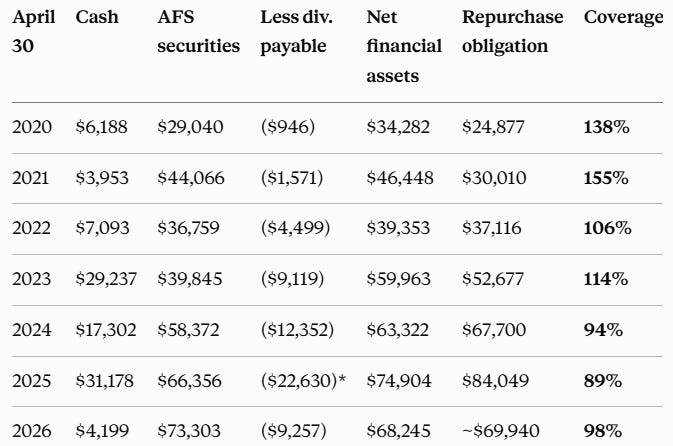
For now this one goes on the watchlist. It is only when the cash balance significantly outpaces the ESOP obligation amount OR if the appraised ESOP price is significantly higher than the public share price, that the stock gets interesting enough to take action on.
Agree with your conclusions. In 2021, this was an absurd deal. Today it is less clear. The cyclical nature of the textbook adoption cycle also makes me a bit nervous at this juncture.